Loading... Please wait...
Categories
Blog - Mitutoyo setting rings
How to Choose the Right Carbide Cutting Tools for CNC Machining
Posted on Oct 7th 2026
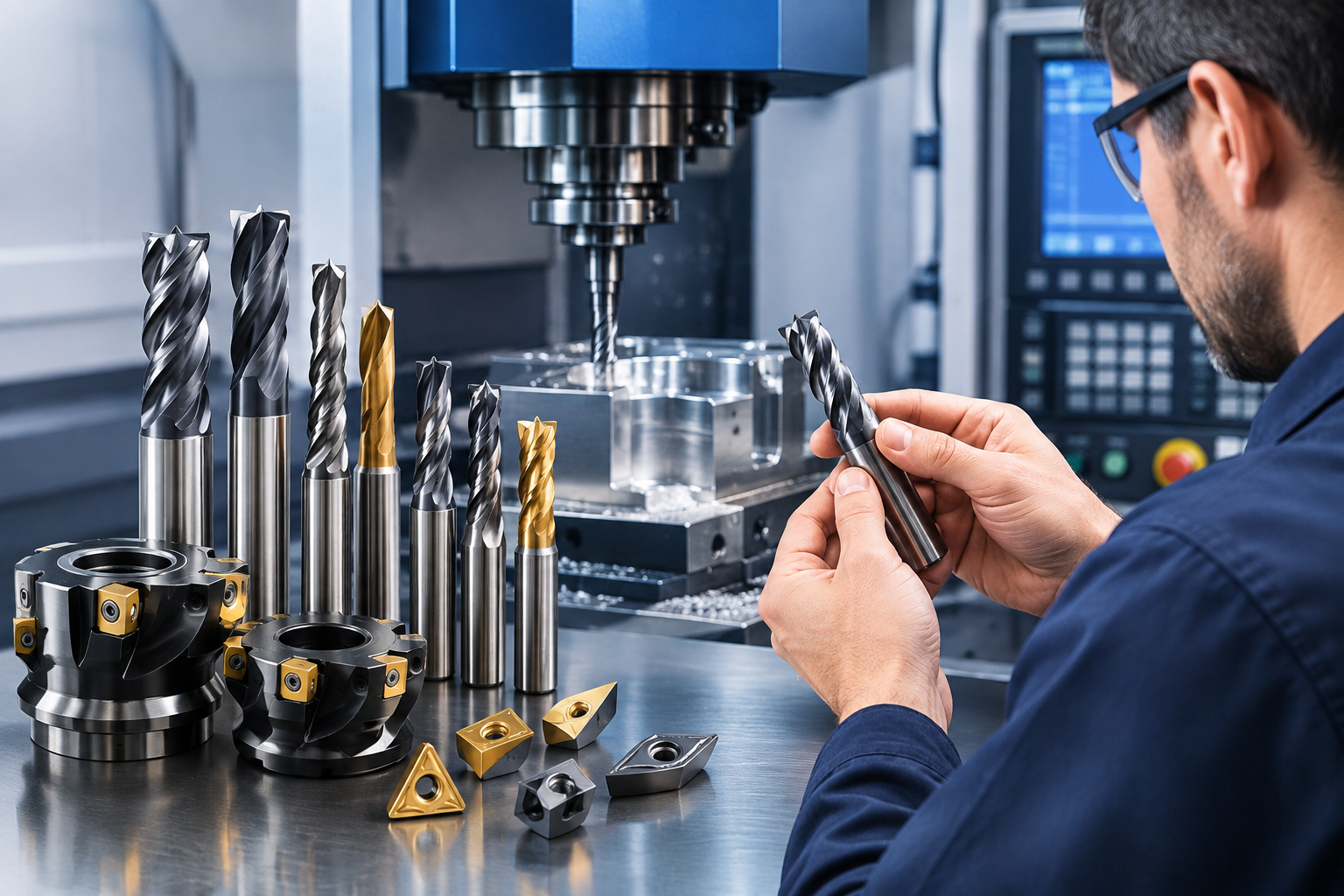
Choosing the right cutting tool is one of the most important decisions in CNC machining. The tool you select can affect cutting speed, tool life, surface finish, dimensional accuracy, and overall production efficiency. Carbide cutting tools are widely used in demanding machining applications because they offer the hardness and wear resistance needed for consistent performance.
However, not every carbide tool is designed for the same application. Material type, cutting operation, machine capabilities, tool geometry, and production requirements all need to be considered before making a selection. Understanding these factors can help machinists achieve better results while reducing unnecessary tool changes and downtime.
Consider the Material Being Machined
The first step in choosing a carbide cutting tool is identifying the material you will be machining. Different materials create different cutting conditions and levels of heat, friction, and tool wear.
Aluminum, stainless steel, hardened steel, cast iron, and other alloys may require different tool geometries and cutting characteristics. For example, aluminum machining can benefit from tooling designed for efficient chip evacuation, while hardened materials may require carbide tools engineered to withstand higher cutting forces and temperatures.
Selecting a tool specifically suited to the workpiece material can improve tool life and help produce a more consistent surface finish.
Match the Tool to the Machining Operation
CNC machining involves several operations, and each one can require a different type of carbide tool. Milling, drilling, slotting, profiling, and finishing all place different demands on the cutting edge.
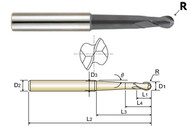
Carbide end mills are commonly used for milling and profiling applications, while solid carbide drills are designed for creating accurate holes. Specialty tools may be appropriate for deep-hole drilling, high-feed machining, or applications where extended reach is required.
Before selecting a tool, determine exactly what operation it will perform. Choosing a tool designed for the specific application can help improve cutting efficiency and reduce premature wear.
Evaluate Tool Geometry
Tool geometry has a direct impact on machining performance. Important factors include flute count, helix angle, cutting-edge design, diameter, and overall tool length.
A higher flute count may provide more cutting edges for certain finishing operations, while fewer flutes can provide greater chip space when machining materials that produce larger chips. Tool geometry should also match the machine's capabilities and the desired material removal rate.
For demanding applications, high performance cutting tools can provide specialized geometries designed to handle increased feed rates, difficult materials, or challenging cutting conditions. These tools can help improve productivity while maintaining reliable machining performance.
Consider Cutting Speed and Feed Rate
Even a high-quality carbide tool can perform poorly if the cutting parameters are not appropriate. Cutting speed, feed rate, depth of cut, and spindle speed should be selected according to the tool manufacturer's recommendations and the material being machined.
Running a tool too aggressively can cause excessive heat, edge chipping, vibration, or premature failure. Running it too conservatively can reduce productivity and may cause inefficient cutting.
The goal is to establish a balanced combination of speed and feed that allows the tool to remove material efficiently while maintaining acceptable tool life and part quality.
Pay Attention to Tool Reach and Stability
Tool reach becomes especially important when machining deep pockets, narrow features, or difficult-to-access areas. Although extended-reach tools can provide access to challenging features, excessive tool extension can increase the risk of deflection and vibration.
Whenever possible, use the shortest practical tool length for the application. Proper tool holding is equally important. A secure and accurate tool holder can improve stability and help transfer cutting forces efficiently.
For demanding CNC operations, combining the correct carbide tool with appropriate workholding and tool holding can make a significant difference in overall machining consistency.
Use Precision Measurement to Verify Results
Tool selection is only part of achieving accurate CNC machining results. Measurements should be checked throughout the machining process to ensure parts remain within specification.
Precision measuring equipment can help verify dimensions, bore sizes, depths, and other critical features. Accessories such as Mitutoyo setting rings can also support accurate setup and calibration of compatible measuring equipment.
When machining tight-tolerance components, reliable measurement helps identify dimensional changes before they result in excessive scrap or rework. Combining accurate cutting tools with dependable inspection practices creates a more controlled manufacturing process.
Think About Tool Life and Production Volume
The best tool is not always the least expensive tool. A lower-cost option may require more frequent replacement, while a specialized carbide tool may provide longer service life and better productivity.
For high-volume production, tool life can have a major effect on operating costs. Longer-lasting tooling can reduce tool-change frequency, machine downtime, and interruptions to production.
For lower-volume jobs, the selection may be based more heavily on versatility and the ability to handle multiple applications. Consider the total machining process rather than focusing only on the initial tool price.
Choose Tools for Long-Term Performance
Selecting carbide cutting tools requires more than choosing a diameter or style from a catalog. The workpiece material, machining operation, tool geometry, cutting parameters, machine setup, tool reach, and production volume should all be evaluated.
At Cutting Tool Solutions, machinists and manufacturers can find carbide cutting tools and related industrial products designed for a wide range of CNC machining requirements. The right combination of tooling and measurement equipment can help improve accuracy, productivity, and consistency across production runs.
Whether you are machining common materials or working with demanding alloys, taking time to match the tool to the application can help extend tool life and produce better results. With the proper carbide tooling, accurate setup, and controlled cutting parameters, CNC machining operations can become more predictable and efficient.
Frequently Asked Questions
1. What should I consider when choosing carbide cutting tools for CNC machining?
Consider the material being machined, cutting operation, tool diameter, flute configuration, cutting speed, feed rate, tool reach, and machine capabilities. Selecting tooling that matches the specific application can improve cutting performance, tool life, surface finish, and dimensional accuracy.
2. What are high performance cutting tools used for?
High performance cutting tools are designed for demanding machining applications where productivity, precision, and tool life are important. They can feature specialized geometries and cutting edges that support higher material removal rates and consistent performance when machining challenging materials.
3. How do Mitutoyo setting rings help with precision measurement?
Mitutoyo setting rings are precision reference tools used with compatible measuring equipment to help establish or verify measurement accuracy. They can be useful when checking instruments and maintaining reliable dimensional inspection in machining environments.
4. Can high performance cutting tools improve CNC machining productivity?
Yes. High performance cutting tools can help increase productivity when properly matched to the material and machining application. Their specialized designs may allow suitable increases in cutting speeds or feed rates while maintaining controlled tool wear and reliable part quality.
5. Why is measurement important when using carbide cutting tools?
Accurate measurement helps confirm that machined components meet their required dimensions and tolerances. Using appropriate inspection equipment, including Mitutoyo setting rings where applicable, can support consistent setups and help identify dimensional changes before they lead to excessive scrap or rework.